Posted: Monday, March 2, 2026
Over the weekend, tensions in the Middle East escalated as the United States and Israel launched coordinated military strikes on Iran, targeting key military and leadership sites. Iran responded with missile and drone attacks across the region, raising the risk of a broader regional conflict.
What Happened and Who Is Involved
The escalation follows months of strained negotiations between the United States and Iran over nuclear development, sanctions relief, and regional security. Diplomatic efforts stalled over recent weeks, with both sides accusing the other of failing to meet key conditions, increasing the likelihood of military confrontation.
The United States and Israel then carried out coordinated strikes inside Iran aimed at degrading its military infrastructure and nuclear capabilities. In response, Iran launched widespread missile and drone attacks targeting Israel and U.S. interests in the region.
The conflict has also drawn in additional regional actors. Iran-aligned groups, including Hezbollah in Lebanon, have launched attacks into Israel, while Gulf states that host U.S. military forces remain on heightened alert. The situation increases the risk of a broader regional confrontation involving multiple Middle Eastern countries.
What This Means for Your Money
Markets typically react quickly to geopolitical headlines, and this situation is no different. Oil prices have jumped sharply, with Brent crude up nearly 10% amid concerns about potential supply disruptions. Iran borders the Strait of Hormuz, a critical chokepoint that handles roughly 20% of global oil flows, and any threat to traffic through the strait can pressure energy prices higher.
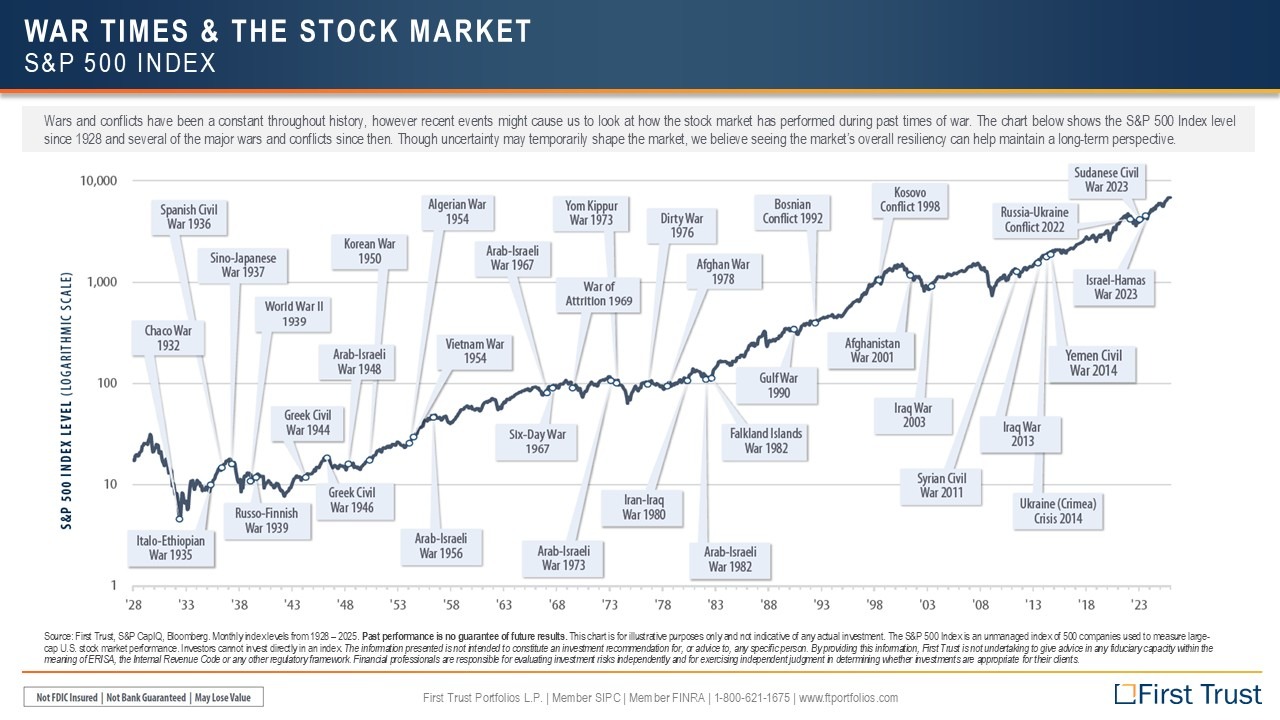
Equities opened lower but have since rallied, while energy and defense stocks were initially up meaningfully but have since moderated. While the situation remains serious geopolitically, our role is to assess it through the lens of your portfolio. History shows that market pullbacks tied to Middle East conflicts have typically been short-lived, often creating opportunities for long-term investors (see chart below). As we’ve discussed in prior commentaries, valuations have been stretched, which is why we’ve maintained a modestly risk-off positioning. At elevated valuation levels, markets are more sensitive to negative headlines.
We will continue to monitor the situation closely and make portfolio adjustments as needed.